Sunday, August 8, 2010

KL-PERLIS-THAI


SALAM semua....ALOO..ALOOO..hahaha

Sekian lama xupdate blog xseberapa nie...jeng jeng jeng..rajin plak tangan nak sing-in blog nie..takde task la katakan kat ofice (konon2)..alang2 menyeluk pekasam..biarla sampai ke pangkal lengan..ada cerita best..kasi update la..xder cerita..senyap bisu jela..(btol x)

6-8 Ogos..3 hari kot p jln2 kikis duit gaji..pokai den bulan nie..baget nak makan angin la (konon)..sepanjang jalan aku kikis duit bank...terlajak perahu boleh diundur..terlajak berbelanja padan muke..

3 days berjalan2 sekitar negeri Perlis Indera Kayangan..mcm2 aku tengok..mcm2 aku mkn..mcm2 aku buat..semua macam la katakan..

Thanks 2 mr kamal ariff..my officemate frend..menumpangkan sepanjang perjalanan mlm hari pertama berangkat pergi ke perlis pukul 1 a.m..kredit 2 maksu n paksu kamal(aku xingat plak nama depa) yang story kat aku mcm2 benda kat Perlis nie..anak2 paksu n maksu, yang manaja gler nagn orang luaq mcm aku..kira friendly family la nie..sempoi and happy jer aku tengok sepanjang 3 hari 2..


Makan Best n Spara pelik Di rumah Maksu!!!


Rumpai Laut (Best n Pelik)
aku xtau plak benda alah ni bley dimakan..tp..sekali mkn..mesti mau di tambah..dicicah dengan sambal belacan..buat2 makan mcm mkn ulam jer..ngap skali ngan nasi..sodap kot..rugi xtry kwn2..
selalu kalu kt p pulau kt dok lihat n buang ja benda tu..rupa2nya bleh di mkn jgk..


Ikan Pekasam
Ni satu benda lg aku dok syok tengok adik maksue pancing kat depan paya umah dia..aku ingatkan
nak guna untuk buat umpan pada ikan besar..rupa2nya utk hidangan makan luch kot...kecik-kecik jer ikan dia kot..Tapi, bile da digorng utk pekasam..perg..sedap la pulak...


Pulut Ayam (Best)!!

Ni bukan sebarang pulut nie..lain dari yang lain..biasanyakan kat Kl mkn pulut kuning ngan cicah sambal rendang.kat Perlis plak pulut putih mkan dengan ayam panggang n di cicah dengan sambal manis2 pedas..kenyang gak mkan benda nie..nie hidangan utk menu di petang hari.sempoi la mksu..trimas.mmg best n kenyang..


Padang Besar ( Aktiviti menghabiskan duit )


Ini bab,mmg aku xleh nak cover2..jumpa je benda kau nak..mesti aku sambar..mengenangkan da ada limitation jer utk berbelanja ari 2..so..tahan jela nafsu belanja 2 yer encik hazwan..dari jersy..baju t-shirt..kerongsoang (mak aku kirim n utk kwn2).beg2 laptop..keropok n kerepek..
kira sume benda 2 la aku dok bli..memang belanja sakan aku time 2..


sooooo...kwn2..kalu nak bli belah sakan dengan penuh penjimatan..dtgla cni..mcm2 ada kot...jauh beza ngan harga kat KL 2..mau 2 3 ganda...

kalu nak berniaga ker..nak bg hadiah ker..sesuai la dtg cni..dari makanan hinggala ke barang2..
sumea ada...


-----------------------------------------------------------------------------------------------

Hari Kedua


Selamat Datang ke Jeti Kuala Perlis!!!

Mkn..mkn..mkn...mcm mana la x gemok..hahah..

Uissshhhh..best gleeeerrr...


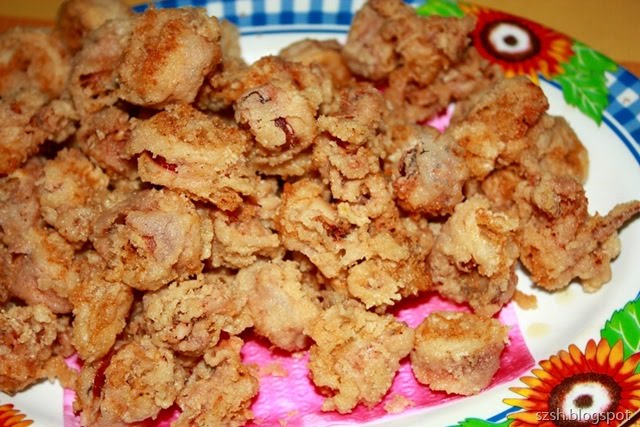
Sotong TErBaik!!banyak plak 2..rangup dan garing...


Ni pon satu lg benda baru aku try..sosage di luar..pulut didalam..di bakar..mmg best!!


---------------------------------------------------------------------------------------------

Last Day...


Mcm biasa..pg dok breakfast nasi lemak utara..xbanyak beza pon ngan yang kat KL


Pas makan maksu bawak p ladang kuda kat mana pon aku xingat..yang aku tau btul2 sebelah Kilang Gula Felda Perlis ...kira kat tengah2 ladang tebu 2 la port baik kuda 2 dibawa berjalan..


Kudanya xla banyak sangat..yg aku dengar dari mulut maksu ia milik Tengku..tengku aper pon aku xsure dah..yang pasti muke dia selalu kuar tv kot ada siaran tentang program permotoran..huhuu(mudah lupa la katakan)


Bukit Kayu Itam - DANOK


Ni kira first time la kau masuk sempadan...tq to maksu n paksu yg sudi membawa kami berjalan2 n makan2..sambil2 cuci mata la...

huuhu...giler panas port nie..da lain macm aku masuk..seberang jer kot dari Bukit Kayu itam 2...

Antara menu makanan..aku upload kan..


Menu Daging Salai Bkar...best..garing!!


Tomyamnyer pon mmg kau..penuh isi n rasa..mmg thai mari..(kalu kat kl..banyak daun n semak jer dlm 2)


Termasukla dengan telur, sayur campur , ayam panggang n air soya...Menu hidnagan utk 7 org..rm80..thanks mksu..blanja mkn..kenyang saya...

yang bestnyer kat cni..boleh buat urusan jual beli pakai duit Bath n Malaysia..tp giler murah la barang dia...jauh beza ngan barang kat Malaysia...


--------------------- Pukul 10.pm bertolak balik / 4a.m sampai S.ALAM---------------------

Friday, July 23, 2010

"スタック"

私はベッドの今日得ることができない
またはオフに私の心を得る
私は方法を見つけることができないよう
背後にある愛をしたままにする

私はtrippinではない
私はあなたが不足している
あなたは私が言ってるのよ
あなたは私の言いたいこと知っている

あなたは私は、文字列からぶら下がっ保管
なぜあなたは私に叫びする?
私はあなたのすべてを与えることを試みた
しかし、あなたは私に与えてくれたうそをつく

時折
私はすべての人よ
私はあなたが電話で私を呼ぶよう希望する
あなたは私を欲しがっている
しかし、あなたは決してしない
私はこのような馬鹿のように感じる
私ができることはない...だ
私はこのような馬鹿だ
あなたのために

-use google translate-

Monday, July 19, 2010

A few secrets of the "Mona Lisa."


PARIS – The enigmatic smile remains a mystery, but French scientists say they have cracked a few secrets of the "Mona Lisa." French researchers studied seven of the Louvre Museum's Leonardo da Vinci paintings, including the "Mona Lisa," to analyze the master's use of successive ultrathin layers of paint and glaze - a technique that gave his works their dreamy quality.

Specialists from the Center for Research and Restoration of the Museums of France found that da Vinci painted up to 30 layers of paint on his works to meet his standards of subtlety. Added up, all the layers are less than 40 micrometers, or about half the thickness of a human hair, researcher Philippe Walter said Friday.

The technique, called "sfumato," allowed da Vinci to give outlines and contours a hazy quality and create an illusion of depth and shadow. His use of the technique is well-known, but scientific study on it has been limited because tests often required samples from the paintings.


The French researchers used a noninvasive technique called X-ray fluorescence spectroscopy to study the paint layers and their chemical composition.

They brought their specially developed high-tech tool into the museum when it was closed and studied the portraits' faces, which are emblematic of sfumato. The project was developed in collaboration with the European Synchrotron Radiation Facility in Grenoble.

The tool is so precise that "now we can find out the mix of pigments used by the artist for each coat of paint," Walter told The Associated Press. "And that's very, very important for understanding the technique."

The analysis of the various paintings also shows da Vinci was constantly trying out new methods, Walter said. In the "Mona Lisa," da Vinci used manganese oxide in his shadings. In others, he used copper. Often he used glazes, but not always.

The results were published Wednesday in Angewandte Chemie International Edition, a chemistry journal.

Tradition holds that the "Mona Lisa" is a painting of Lisa Gherardini, wife of Florentine merchant Francesco del Giocondo, and that da Vinci started painting it in 1503. Giorgio Vasari, a 16th-century painter and biographer of da Vinci and other artists, wrote that the perfectionist da Vinci worked on it for four years.

Sunday, July 18, 2010

Badminton


The beginnings of Badminton can be traced to mid-18th century British India, where it was created by British military officers stationed there.[2] Early photographs show Englishmen adding a net to the traditional English game of battledore and shuttlecock. Being particularly popular in the British garrison town Poona (now Pune), the game also came to be known as Poona.[2][3] Initially, balls of wool refereed as ball badminton were preferred by the upper classes in windy or wet conditions, but ultimately the shuttlecock stuck. This game was taken by retired officers back to England where it developed and rules were set out.

As early as 1860, Isaac Spratt, a London toy dealer, published a booklet, Badminton Battledore - a new game, but unfortunately no copy has survived.[4]

The new sport was definitively launched in 1873 at the Badminton House, Gloucestershire, owned by the Duke of Beaufort. During that time, the game was referred to as "The Game of Badminton," and the game's official name became Badminton.[5]

Until 1887, the sport was played in England under the rules that prevailed in British India. The Bath Badminton Club standardized the rules and made the game applicable to English ideas. The basic regulations were drawn up in 1887.[5] In 1893, the Badminton Association of England published the first set of rules according to these regulations, similar to today's rules, and officially launched badminton in a house called "Dunbar" at 6 Waverley Grove, Portsmouth, England on September 13 of that year.[6] They also started the All England Open Badminton Championships, the first badminton competition in the world, in 1899.

The International Badminton Federation (IBF) (now known as Badminton World Federation) was established in 1934 with Canada, Denmark, England, France, the Netherlands, Ireland, New Zealand, Scotland, and Wales as its founding members. India joined as an affiliate in 1936. The BWF now governs international badminton and develops the sport globally.

While set out in England, competitive badminton in Europe has traditionally been dominated by Denmark. Indonesia, South Korea, China and Malaysia are among the nations that have consistently produced world-class players in the past few decades and dominated competitions on the international level, with China being the most dominant in recent years.


Laws

The following information is a simplified summary of the Laws, not a complete reproduction. The definitive source of the Laws is the BWF Statutes publication,[7] although the digital distribution of the Laws contains poor reproductions of the diagrams.

Playing court dimensions
Badminton court, isometric view

The court is rectangular and divided into halves by a net. Courts are usually marked for both singles and doubles play, although the laws permit a court to be marked for singles only. The doubles court is wider than the singles court, but both are the same length. The exception, which often causes confusion to newer players, is that the doubles court has a shorter serve-length dimension.

The full width of the court is 6.1 metres (20 ft), and in singles this width is reduced to 5.18 metres (17 ft). The full length of the court is 13.4 metres (44 ft). The service courts are marked by a centre line dividing the width of the court, by a short service line at a distance of 1.98 metres (6 ft 6 inch) from the net, and by the outer side and back boundaries. In doubles, the service court is also marked by a long service line, which is 0.76 metres (2 ft 6 inch) from the back boundary.

The net is 1.55 metres (5 ft 1 inch) high at the edges and 1.524 metres (5 ft) high in the centre. The net posts are placed over the doubles sidelines, even when singles is played.

There is no mention in the Laws of Badminton of a minimum height for the ceiling above the court. Nonetheless, a badminton court will not be suitable if the ceiling is likely to be hit on a high serve.
[edit] Equipment laws

The Laws specify which equipment may be used. In particular, the Laws restrict the design and size of racquets and shuttlecocks. The Laws also provide for testing a shuttlecock for the correct speed:

3.1
To test a shuttlecock, use a full underhand stroke which makes contact with the shuttlecock over the back boundary line. The shuttlecock shall be hit at an upward angle and in a direction parallel to the side lines.

3.2
A shuttlecock of the correct speed will land not less than 530 mm and not more than 990 mm short of the other back boundary line.

[edit] Scoring system and service
Main article: Scoring system development of badminton
[edit] The basics

Each game is played to 21 points, with players scoring a point whenever they win a rally regardless of whether they served [7] (this differs from the old system where players could only win a point on their serve and each game was played to 15 points). A match is the best of three games.

At the start of the rally, the server and receiver stand in diagonally opposite service courts (see court dimensions). The server hits the shuttlecock so that it would land in the receiver's service court. This is similar to tennis, except that a badminton serve must be hit below waist height and with the racquet shaft pointing downwards, the shuttlecock is not allowed to bounce and in badminton, the players stand inside their service courts unlike tennis.

When the serving side loses a rally, the serve immediately passes to their opponent(s) (this differs from the old system where sometimes the serve passes to the doubles partner for what is known as a "second serve").

In singles, the server stands in her/his right service court when her/his score is even, and in her/his left service court when her/his score is odd.

In doubles, if the serving side wins a rally, the same player continues to serve, but s/he changes service courts so that s/he serves to a different opponent each time. If the opponents win the rally and their new score is even, the player in the right service court serves; if odd, the player in the left service court serves. The players' service courts are determined by their positions at the start of the previous rally, not by where they were standing at the end of the rally. A consequence of this system is that, each time a side regains the service, the server will be the player who did not serve last time.
[edit] Details

When the server serves, the shuttlecock must pass over the short service line on the opponents' court or it will count as a fault.

If the score reaches 20-all, then the game continues until one side gains a two point lead (such as 24-22), up to a maximum of 30 points (30-29 is a winning score).

At the start of a match, the shuttlecock is cast and where ever the shuttlecock is pointing that side begins or a coin is tossed. The winners of the coin toss may choose whether to serve or receive first, or they may choose which end of the court they wish to occupy. Their opponents make the remaining choice. In less formal settings, the coin toss is often replaced by hitting a shuttlecock into the air: whichever side the corked end points will be the side that serves first.

In subsequent games, the winners of the previous game serve first. These can also be called rubbers. If one team wins a game they play once more and if they win again they win that match, but if they lose they play one more match to find the winning team. For the first rally of any doubles game, the serving pair may decide who serves and the receiving pair may decide who receives. The players change ends at the start of the second game; if the match reaches a third game, they change ends both at the start of the game and when the leading pair's score reaches 11 points.

The server and receiver must remain within their service courts, without touching the boundary lines, until the server strikes the shuttlecock. The other two players may stand wherever they wish, so long as they do not insight the opposing server or receiver.
[edit] Lets

If a let is called, the rally is stopped and replayed with no change to the score. Lets may occur because of some unexpected disturbance such as a shuttlecock landing on court (having been hit there by players on an adjacent court) or in small halls the shuttle may touch an overhead rail which can be classed as a let.

If the receiver is not ready when the service is delivered, a let shall be called; yet, if the receiver attempts to return the shuttlecock, he shall be judged to have been ready.

There is no let if the shuttlecock hits the tape (even on service).

Thursday, July 15, 2010

Harga Baru Minyak Petrol - Adusss


Semalam aku dapat info dari member ttg news nie..mula2 xpercaya..alik umah plak adik aku pon ckp mcm 2 gak..tak puas ati aku..try surf kat internet..lip-lap2..btol kot..secara pantas aku p trus p.pump..isi penuh kete n moto..

Petrol RON 95 dan RON 97 serta diesel naik 5 sen.
Manakala harga gula pula naik 25 sen, dengan gas LPG naik sebanyak 10 sen sekilogram
Kenaikan semua harga tersebut akan berkuatkuasa mulai tengah malam ini.

Berikut adalah harga baru:
- Petrol RON 95 - RM1.85 seliter.
- Petrol RON 97 - RM2.10 seliter.
- Diesel - RM1.75 seliter.
- Gula - RM1.70 sekilogram
- Gas LPG - RM1.85 sekilogram

Berikut adalah harga baru gas:
* Tong 14KG - dari RM24.50 kepada RM25.90 (naik RM1.40)
* Tong 12KG - dari RM21.00 kepada RM22.20 (naik RM1.20)
* Tong 10KG - dari RM17.50 kepada RM18.50 (naik RM1.00


Apa yang pasti enaikan Petrol dan diesel sudah pastinya akan mengakibatkan kenaikan seluruh harga barang-barang keperluan yang lain...so..bejimat2lah dari sekarang k...

What Caffeine Actually Does to Your Brain..HAha!!


For all of its wild popularity, caffeine is one seriously misunderstood substance. It's not a simple upper, and it works differently on different people with different tolerances—even in different menstrual cycles. But you can make it work better for you.

We've covered all kinds of caffeine "hacks" here at Lifehacker, from taking "caffeine naps" to getting "optimally wired." And, of course, we're obsessed with the perfect cup of coffee. But when it comes to why so many of us love our coffee, tea, soda, or energy drink fixes, and what they actually do to our busy brains, we've never really dug in.

While there's a whole lot one can read on caffeine, most of it falls in the realm of highly specific medical research, or often conflicting anecdotal evidence. Luckily, one intrepid reader and writer has actually done that reading, and weighed that evidence, and put together a highly readable treatise on the subject. Buzz: The Science and Lore of Alcohol and Caffeine, by Stephen R. Braun, is well worth the short 224-page read. It was released in 1997, but remains the most accessible treatise on what is and isn't understood about what caffeine and alcohol do to the brain. It's not a social history of coffee, or a lecture on the evils of mass-market soda—it's condensed but clean science.

What follows is a brief explainer on how caffeine affects productivity, drawn from Buzz and other sources noted at bottom. We also sent Braun a few of the questions that arose while reading, and he graciously agreed to answer them.


Caffeine Doesn't Actually Get You Wired


Right off the bat, it's worth stating again: the human brain, and caffeine, are nowhere near totally understood and easily explained by modern science. That said, there is a general consensus on how a compound found all over nature, caffeine, affects the mind.

Every moment that you're awake, the neurons in your brain are firing away. As those neurons fire, they produce adenosine as a byproduct, but adenosine is far from excrement. Your nervous system is actively monitoring adenosine levels through receptors. Normally, when adenosine levels reached a certain point in your brain and spinal cord, your body will start nudging you toward sleep, or at least taking it easy. There are actually a few different adenosine receptors throughout the body, but the one caffeine seems to interact with most directly is the A1 receptor. More on that later.


Enter caffeine. It occurs in all kinds of plants, and chemical relatives of caffeine are found in your own body. But taken in substantial amounts—the semi-standard 100mg that comes from a strong eight-ounce coffee, for instance—it functions as a supremely talented adenosine impersonator. It heads right for the adenosine receptors in your system and, because of its similarities to adenosine, it's accepted by your body as the real thing and gets into the receptors.

It Boosts Your Speed, But Not Your Skill—Depending on Your Skill Set


Johann Sebastian Bach loved him some coffee. So did Voltaire, Balzac, and many other great minds. But the type of work they did didn't necessarily get a boost from their prodigious coffee consumption—unless their work was so second-nature to them that it felt like data entry.

The general consensus on caffeine studies shows that it can enhance work output, but mainly in certain types of work. For tired people who are doing work that's relatively straightforward, that doesn't require lots of subtle or abstract thinking, coffee has been shown to help increase output and quality. Caffeine has also been seen to improve memory creation and retention when it comes to "declarative memory," the kind students use to remember lists or answers to exam questions.

(In a semi-crazy side note we couldn't resist, researchers have implied this memory boost may be tied to caffeine's effect on adrenaline production. You have, presumably, sharper memories of terrifying or exhilarating moments in life, due in part to your body's fight-or-flight juice. Everyone has their "Where I was when I heard that X died" story, plugging in John F. Kennedy, John Lennon, or Kurt Cobain, depending on generational relatability).

Then again, one study in which subjects proofread text showed that a measurable boost was mainly seen by those who could be considered "impulsive," or willing to sacrifice accuracy and quality for speed. And the effect was only seen in morning tests, indicating the subjects may have either become lightly dependent on caffeine, or were more disposed to such tasks at that time of day.

So when it comes to caffeine's effects on your work, think speed, not power. Or consider it an unresolved question. If we're only part of the way to understanding how caffeine affects the brain, we're a long way to knowing exactly what kind of chemicals or processes are affected when, say, one writes a post about caffeine science one highly caffeinated afternoon.

For a more direct look at what happens to your brain when there's caffeine in your system, we turn to the the crew at Current. They hooked up one of their reporters to a brain monitor while taking on some new caffeine habits, and share their brains on caffeine:

SKVE....Penat + Makan + Tdo = Gemokk!!


Hahaha..e2 la yg terjadi kat aku semalam..penat giler balik opis lewat smlm..angkara hujan..
Nak redah hujan confirm basah satu hal..jem lagi..urhhh..kurniaan allah..jngla mengeluh..xbaik..

Nak elak jem punye pasal..aku try highway baru SKVE= PUTRAJAYA-S.ALAM..tol free..Free sebab baru bukak la..
Mana ada tol yg free..lain la kalu lari..pasal baru bukak gak aku try tol 2..ingatkan bley la menyingkatkan perjalan..
Test 0 meter kat kete..jln punye jln dng confidentye aku lalu (walaupun ada dlm 3-4 kete je kot yang lalu kat c2) mayb
coz jln baru kot..nak bagi sedap ati la..

Puas aku tunggu exit higway 2 ..rupa2nya kluar kat KLIA..so..Putrajaya-KLIA-S.alam..tngok kat meter 32km=25 minit..
erm..kalu ikut LDP (jln biasa aku pakai) 15km=32minit...mcm lebih kurang jela..